


Grow your business with our range of web and digital growth services.

MAXIION

OUR SERVICES

Edit Template

MAXIION

OUR SERVICES

Grow your business with our range of web and digital growth services.

MAXIION

OUR SERVICES

Edit Template

Uncategorized

Uncategorized

When You Need a Website Redesign

Growth Websites When your website needs a redesign, and when it doesn’t A slow month, or a design you have grown tired of, is not always a reason to rebuild. This guide helps you tell the difference between a website that needs a redesign and one that needs a few focused changes. Few decisions about a website cause more hesitation than whether to rebuild it. A redesign is a significant investment of time and money, and it is easy to launch into one for the wrong reasons, or to keep patching a site that has quietly stopped working. The useful first step is to separate how your website looks from what it does for the business. Start with the problem, not the design When a website stops pulling its weight, a full redesign can feel like the obvious answer. It is also the most expensive and disruptive option, and it often fixes the wrong thing. A site can look dated and still convert well. It can also look modern and lose you enquiries every week. The question worth asking is not whether the design feels old, but where the site is costing you business. Signs a redesign is the right call Some problems are structural, and structural problems rarely respond to small changes. If several of the points below are true, a redesign is usually the sensible route. • Your site runs on a platform or theme that is no longer supported, or that your team cannot edit without a developer for every small change. • The structure works against your visitors, so people cannot find your main services and the pages that matter most are buried. • The site is not responsive, or it breaks on phones, where a large share of your visitors now arrive. • Your business has moved on, and the services, audience or positioning on the site no longer match what you sell. • Speed and search visibility are held back by the underlying build, rather than by content you could improve in place. When the foundations are the problem, patching them tends to cost more over time than replacing them. A redesign lets you put the structure, the platform and the performance right together, with accurate tracking in place from launch so the results are visible. Signs you do not need one yet Just as often, the site is sound and the real issue is narrower. These situations usually call for focused work rather than a rebuild. • Conversion is the weak point on a few key pages, where a clearer message, a stronger call to action and a simpler enquiry form would lift results on their own. • The design feels tired but still works, so a refresh of the branding, imagery and typography can modernise the look at a fraction of the cost. • One section is doing the damage, such as a slow product page or a confusing checkout, and it can be improved in isolation. • Traffic is low rather than wasted, which means the priority is visibility and content, not a new website for the same small audience. Spending a redesign budget on a site that mainly needs better copy and clearer calls to action is a common and avoidable mistake. A redesign should solve a problem you can name, not a feeling you cannot shake. Let the evidence decide The honest way to choose is to look at what the site is doing now. Accurate tracking shows where visitors arrive, which pages they leave from, and where enquiries are lost. In most cases the data points to a specific bottleneck rather than a general failure. If the problems cluster around one or two pages, you have a fix. If they show that the structure, the platform and the performance are all working against you, you have a redesign. How MAXIION approaches it Every website engagement at MAXIION starts with a full audit rather than a quote for a rebuild. We review the current site, the traffic it receives, the pages where visitors lose interest, and the enquiries it generates. Sometimes the recommendation is a full redesign. Often it is a shorter list of focused improvements to the site you already have. Either way, we share the reasoning in full before any quote is prepared, so your budget goes where it will do the most good. If you are weighing up a rebuild, our Redesigns service covers the structural cases, and our Professional Websites service covers new builds from the ground up. START WITH AN AUDIT Not sure whether you need a redesign? Book a 15-minute audit review and we will look at your site, your traffic and your enquiries, then tell you honestly whether a redesign is worth it. Book a Call → Contact Us

Uncategorized

Why website maintenance matters

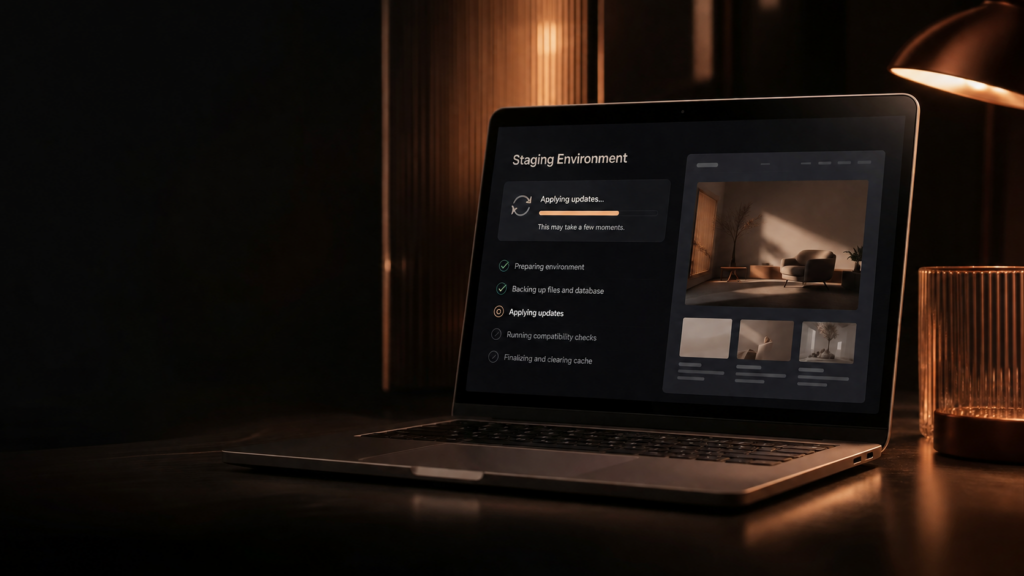
Technical Care Why website maintenance matters A live website is not a finished project. It is a working asset that needs steady upkeep to stay fast, secure and dependable, and most of that work stays invisible until it is missing. When a new website launches, it is tempting to treat it as finished. In practice a live site is closer to a vehicle than a painting. It runs every day, it wears over time, and it needs regular attention to keep performing. Maintenance is the steady work that keeps it in order, and its value shows up mostly in the problems you never have. A website is a working asset, not a finished project The software a website is built on updates constantly. The plugins and integrations it relies on change. Browsers move on, security threats evolve, and content that was accurate at launch slowly drifts out of date. Left alone, a site does not stay still; it falls behind. Regular upkeep keeps the whole thing current, so the website you launched is the website your customers still experience a year later. What good maintenance covers Website care is more than installing updates when someone remembers. Done well, it is a routine that protects the site and the business behind it. • Updates, applied carefully. Core software, themes, plugins and integrations are kept current, and every update is tested on a staging copy before it reaches the live site, so an update never takes your site down. • Backups you can trust. Backups are taken regularly and, just as importantly, checked, so you know they would restore if you ever needed them. • Security and monitoring. The site is watched for downtime, errors and suspicious activity, so problems are caught early rather than discovered by a customer. • Small fixes and content changes. The everyday adjustments, such as a new page, an updated price or a broken link, are handled quickly so the site stays accurate. None of this is glamorous. All of it is the difference between a site that quietly keeps working and one that fails at the worst possible moment. The cost of skipping it Neglect rarely announces itself. It builds up quietly and then arrives as a single bad day. An unpatched plugin becomes a security breach. A missed backup turns a small error into lost content. A slow accumulation of unmaintained code drags page speed down, which hurts both search visibility and conversion. When a site that has been left alone finally breaks, the repair is almost always more expensive and more stressful than the upkeep would have been, and it tends to happen while you are losing enquiries. Steady maintenance trades a small, predictable cost for the removal of a large, unpredictable one. The best maintenance is the work you never notice, because nothing went wrong. Maintenance protects your other investments There is a further reason it matters. Every other pound you put into your website depends on the site staying healthy. A strong marketing campaign is wasted if it sends people to a page that is down or slow to load. Careful conversion work counts for nothing if the enquiry form quietly stops sending emails after an update. Maintenance is the foundation that lets the rest of your investment in the website do its job, which is why we treat it as ongoing care rather than an occasional repair. How MAXIION approaches it At MAXIION, upkeep sits inside our Technical Care pillar, handled by the same senior team that builds and looks after client sites. Our Website Care and Maintenance service covers the routine that keeps a live site fast, secure and current, with updates tested on staging, backups that are verified, and monitoring so issues are caught early. For businesses that want a closer arrangement, our Dedicated Support service provides a named point of contact and a deeper level of care. In both cases you receive plain monthly reporting, so the quiet work stays visible and you can see exactly what has been done. START WITH AN AUDIT Is your website being looked after? Book a 15-minute review and we will check how your site is maintained today, and where it could be better protected. Book a Call → Contact Us

Uncategorized

SEO or Paid Advertising (PPC)

Digital Growth SEO or paid advertising: where your first marketing pound should go SEO builds visibility that compounds over time, and paid advertising buys attention today. Most businesses need both eventually, but the order you invest in them makes a real difference. SEO and paid advertising are often set against each other, as though a business must pick a side. They are better understood as two tools that do different jobs. The real question is not which one wins, but where your first marketing pound will do the most work. Two tools, two different jobs Search engine optimisation earns visibility in the unpaid results over time, by making your site relevant, credible and technically sound. Paid advertising buys placement at the top of the results, or across other platforms, and it starts working the moment your budget goes live. One compounds slowly and keeps earning. The other switches on and off with your spend. Neither is better in the abstract, so the right first move depends on your timeline, your margins and how much you already know about what your customers search for. When paid advertising earns the first pound Paid advertising tends to be the stronger starting point when you need results quickly, or when you are still learning about your market. • You have a new site or a new offer, and you need enquiries within weeks rather than months. • You are testing demand, and paid campaigns show you quickly which messages, services and audiences respond. • Your margins can absorb a cost for each enquiry while the slower channels build. • You have seasonal or time-sensitive work, where being visible this month matters more than ranking next year. The trade-off is simple. Paid traffic stops the day you stop paying, so it buys you speed and learning rather than a lasting asset. When SEO earns the first pound SEO tends to be the better first investment when you are playing a longer game and want visibility you are not renting. • You can invest for a few months before the returns build, in exchange for traffic that does not disappear when spending pauses. • Your customers research before they buy, and you can answer their questions with useful, relevant content. • You work in a market where paid clicks are expensive, which makes unpaid visibility worth more over time. • You want to strengthen the foundations, since the technical health and content that help SEO also make paid landing pages convert better. The trade-off here is patience. SEO rarely produces results in the first month, but the visibility it builds keeps earning long after the work is done. The honest answer for most businesses For most businesses the useful question is not which channel wins, but which order to fund them in. A sensible pattern is to start with a focused paid campaign that brings in enquiries and shows you what converts, while the SEO foundations are laid in the background. As unpaid visibility grows, you can lean less on paid spend for the terms you now rank for, and keep your paid budget for the competitive or seasonal terms where it pays its way. The two channels support each other. What you learn from paid tells you which pages and search terms deserve SEO effort, and the content you build for SEO gives your paid campaigns better places to send people. The first pound should go where it buys the most learning, not just the most clicks. Measure both against the same thing Whichever you start with, judge it on enquiries and sales, not on traffic or rankings on their own. Visits and positions are signs of progress, but they are not the outcome. This is why accurate tracking matters before you spend anything. Without it, you cannot tell which channel is producing business, and you are left guessing. With it, the decision about where the next pound goes becomes straightforward. How MAXIION approaches it At MAXIION, SEO and paid advertising both sit inside Digital Marketing, and we treat them as parts of one plan rather than competing line items. We look at your goals, your margins and your market, then recommend where to start and how to shift the balance as results come in. If you want to build lasting visibility, our SEO service is the place to begin. If you need enquiries sooner, our Paid Advertising service can bring them in while the slower work builds. START WITH AN AUDIT Wondering where your first pound should go? Book a 15-minute review and we will look at your goals, your market and your numbers, then recommend where to start. Book a Call → Contact Us

Uncategorized

What Midlands logistics operators should fix before paying for traffic

LOGISTICS What Midlands logistics operators should fix before paying for traffic 19 June 2026 · 5 min read Operators in the Golden Triangle search differently to retail buyers. Five things to get right on the page before spending a single pound on Google or Meta. Pay-per-click traffic into a logistics website is some of the most expensive in the UK SME landscape. Spending it on a site that is not ready to convert is one of the easier ways to lose budget quickly. Operators in the Midlands Golden Triangle search with a different intent than retail buyers. They scan for operational fit, geographic reach, fleet capability and a credible enquiry route — usually inside thirty seconds, often between meetings. The site that wins the click has to answer all four before the visitor scrolls. 01 · Make the operating area visible on the first scroll Logistics buyers need to know within one second whether you serve their geography. A clear, written service-area statement on the homepage, with the named hub and the named radius, settles the question without scrolling. 02 · Name the fleet capability in plain English Vehicle classes, payload, special handling, refrigerated routes — say what you do in the language operators use. Generic “transport solutions” copy loses the read. 03 · Show the enquiry route once, prominently A single accountable contact route at the top of every page beats a buried form. Mobile is non-negotiable here — most logistics enquiries come from a phone. 04 · Prove operational credibility Hours, insurance, certifications, equipment, named depot. Logistics is a credibility-led purchase. Operators do not click “Get a quote” until they trust the operator. 05 · Get the mobile speed right before anything else Most paid-traffic clicks for Midlands logistics arrive on a mobile, often a 4G connection on the move. A site that loads in under 2.5 seconds on a mobile connection respects the visitor and earns the read. KEY TAKEAWAYS In short Operating area on the first scroll Named hub, named radius. Settle the geography question in one second. Plain-English fleet capability Use the language operators use, not generic “transport solutions” copy. One prominent enquiry route Top of every page. Mobile first. Credibility proof up front Hours, insurance, certifications, equipment, named depot. Mobile speed under 2.5 seconds It disqualifies the site before the visitor ever reads the offer. KEEP READING Related insights Every extra second on page load costs conversions. We unpack the real numbers behind site speed, and the four fixes that move the needle for most SME websites. WEB PERFORMANCE Why a slow website is quietly costing you leads 8 min read · MAXIION Team Some websites need new content. Some need a new foundation. A practical checklist for which side of the line your site is on, and what each path actually costs. GROWTH WEBSITES Rebuild or patch ,how to know it’s time 8 min read · MAXIION Team

Uncategorized

Rebuild or patch, how to know it’s time

GROWTH WEBSITES Rebuild or patch, how to know it’s time 18 June 2026 · 8 min read Some websites need new content. Some need a new foundation. A practical checklist for working out which side of the line your current site is on, and what each path actually costs. The most expensive website project in any SME is the one that gets rebuilt twice. Once because the previous build was wrong; once because the rebuild was scoped at the wrong level of ambition. The honest decision between rebuilding a site and patching it rarely turns on aesthetics. It turns on whether the underlying foundation can carry the next commercial chapter — the new service line, the new audience, the new sales motion — without breaking. Signs you need a rebuild • The information architecture predates a significant change in the business and now hides important services from search.• The page templates were built for content that no longer exists and force every new page through visual compromise.• Performance cannot be salvaged inside the current platform without rewriting the theme.• The commercial team cannot make routine changes without a developer in the loop. Signs you need a patch • The site converts adequately but the headline messaging is dated.• A small number of pages are slow; the rest behave well.• There is no clear conversion route, but the underlying structure could carry one if it were added.• The brand is shifting and the visual layer needs to follow. The honest decision rarely turns on aesthetics. It turns on whether the foundation can carry the next commercial chapter. What each path actually costs   A Maxiion patch engagement typically runs four to six weeks at a defined scope, with a fixed price and a measurable set of improvements. A full Growth Website rebuild typically runs eight to twelve weeks, with the same fixed-price discipline applied to a wider remit. The risk profile of each is very different, and so is the upside. The Website Audit is the cleanest way to know which side of the line you are on, because it gives you a written brief either way, with the reasoning shared in full before any quote is prepared. KEY TAKEAWAYS In short Aesthetics is rarely the deciding factor The decision turns on whether the foundation can carry the next commercial chapter. Four signs you need a rebuild Outdated information architecture, forced template compromise, unsalvageable performance, a blocked commercial team. Patch path: four to six weeks, fixed price Right when the foundation is sound but the surface is dated. Rebuild path: eight to twelve weeks Right when the foundation cannot carry the next chapter. A written audit is the cheapest first step It gives you a brief with reasoning in full, before any quote is prepared. KEEP READING Related insights Every extra second on page load costs conversions. We unpack the real numbers behind site speed, and the four fixes that move the needle for most SME websites. WEB PERFORMANCE Why a slow website is quietly costing you leads 8 min read · MAXIION Team Operators in the Golden Triangle search differently to retail buyers. Five things to get right on the page before spending a single pound on Google or Meta. LOGISTICS What Midlands logistics operators should fix before paying for traffic 5 min read · MAXIION Team

Uncategorized

Why a slow website is quietly costing you leads

WEB PERFORMANCE Why a slow website is quietly costing you leads 18 June 2026 · 6 min read Every extra second on a page load costs conversions. The four fixes that move the needle for most UK SME websites, and the order to apply them in. The slowness of a website rarely shows up in a meeting agenda. It shows up quietly, one lost enquiry at a time, in the gap between an interested visitor and a buyer who never came back. For most UK SME sites, the gap is measurable. Two seconds of additional load time on a product page or a contact page reliably trims double-digit percentages off the conversion rate of that page. The cost is invisible because it never enters the CRM — the lost visitor leaves before they ever became a lead. Where the time goes The four most common drains we see on Maxiion site audits are uncompressed hero imagery, render-blocking third-party scripts, unused plugin code that ships on every page, and a hosting choice that costs less than a takeaway each month and behaves accordingly. Each one is fixable in hours rather than weeks. The order to fix them in Start with hosting if the site sits on a cheap shared plan — the gains are immediate and proportional. Then strip render-blocking scripts that load before the page paints. Then compress and properly size the hero imagery for the device it is shown on. Finally, audit the plugin layer and remove anything that has not earned its keep. The cost of a slow site is invisible because it never enters the CRM — the lost visitor leaves before they ever became a lead. What good looks like A working target for a Maxiion Growth Website is a Largest Contentful Paint under 2.5 seconds on a 4G mobile connection and a Cumulative Layout Shift under 0.1 on every commercial page. Hit those two and the site is in the top tier of UK SME performance. A working target for a Maxiion Growth Website is a Largest Contentful Paint under 2.5 seconds on a 4G mobile connection and a Cumulative Layout Shift under 0.1 on every commercial page. Hit those two and the site is in the top tier of UK SME performance. KEY TAKEAWAYS In short Speed is a commercial metric Treat page load time alongside conversion rate, not alongside server cost. A working target for a Maxiion Growth Website is a Largest Contentful Paint under 2.5 seconds on a 4G mobile connection and a Cumulative Layout Shift under 0.1 on every commercial page. Hit those two and the site is in the top tier of UK SME performance. Audit before you tune A measured baseline is the difference between optimising the right page and guessing. A working target for a Maxiion Growth Website is a Largest Contentful Paint under 2.5 seconds on a 4G mobile connection and a Cumulative Layout Shift under 0.1 on every commercial page. Hit those two and the site is in the top tier of UK SME performance. Target sub 2.5 seconds on mobile Largest Contentful Paint under 2.5s and Cumulative Layout Shift under 0.1 on every commercial page. A working target for a Maxiion Growth Website is a Largest Contentful Paint under 2.5 seconds on a 4G mobile connection and a Cumulative Layout Shift under 0.1 on every commercial page. Hit those two and the site is in the top tier of UK SME performance. Hosting first, scripts second, imagery third Fix in the order that delivers the largest gain for the least effort. A working target for a Maxiion Growth Website is a Largest Contentful Paint under 2.5 seconds on a 4G mobile connection and a Cumulative Layout Shift under 0.1 on every commercial page. Hit those two and the site is in the top tier of UK SME performance. KEEP READING Related insights Some websites need new content. Some need a new foundation. A practical checklist for which side of the line your site is on, and what each path actually costs. GROWTH WEBSITES Rebuild or patch ,how to know it’s time 8 min read · MAXIION Team Operators in the Golden Triangle search differently to retail buyers. Five things to get right on the page before spending a single pound on Google or Meta. LOGISTICS What Midlands logistics operators should fix before paying for traffic 5 min read · MAXIION Team

Scroll to Top